What questions should you ask a t-shirt printing company?
Getting the right questions from a tshirt printing company before ordering can make or break your project. Print method, fabric range, sample policy, delivery timeline, and reorder support all hide behind a few direct questions, and buyers who ask them early avoid nearly every common ordering headache. Skipping this conversation leaves teams guessing until boxes arrive. Working through the question sets below, one stage at a time, turns a first enquiry into a confident production order.
Method and artwork questions
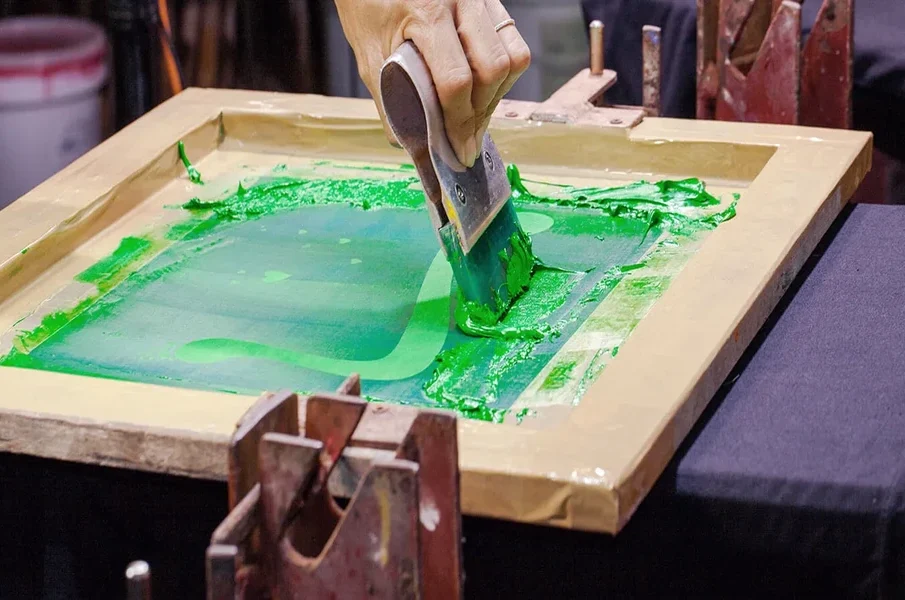
- Method and artwork questions open the conversation, because production technique shapes everything after it. Choose whether silkscreen, digital, embroidery, or vinyl is the company’s in-house method. A shop pressing everything through one technique may not fit artwork that needs another.
- Artwork handling comes next in the same breath. Ensure the studio accepts the file formats you need, whether they redraw low-quality logos, and how many revision rounds they offer. Ask also how your colours get matched, since a logo shade that drifts between screen and fabric changes how the whole batch looks. Companies with clear answers here usually run clean production floors, and vague replies at this stage warn you early.
Fabric and sizing questions
- Fabric questions come second, since the garment matters as much as the print sitting on it. A brilliant design on a scratchy shirt stays in the drawer, so ask which materials the company stocks: cotton for indoor comfort, dri-fit for outdoor sweat, and blends for daily wear. Ask also how each fabric holds print colour, because the same ink behaves differently across surfaces.
- Sizing questions follow straight after, because a perfect shirt in the wrong size never gets worn. Ask whether a full-size chart is available, whether physical size samples can be tried before the batch is confirmed, and how the cut runs, slim, regular, or unisex. Answers here reveal whether the company stocks a real variety or pushes every client toward one supplier catalogue.
Sample and timeline questions
- Sample and timeline questions protect you from surprises after payment. Preproduction samples are standard, but questions about the length of sampling and how changes are handled after sample approval need to be addressed. A confirmed sample is the single best insurance any buyer holds.
- Timeline questions follow naturally. Ask for the standard production duration for your quantity, the rush options for tight events, and the exact point when the clock starts, artwork approval or payment confirmation. Ask how delays get communicated to. A company that explains its schedule openly almost always delivers on time, while unclear timelines at the enquiry stage tend to stretch further during production.
Support and reorder questions
- Support questions close the conversation, and the answers show how a company behaves once payment has cleared. Find out how fast replacement prints are produced and who handles communication when a printed piece needs to be repaired. A supplier with a clear answer for problems is a supplier who has solved them before.
- Reorder questions matter just as much for any team planning beyond one event. Ask whether the company keeps your artwork and screens on file, how exactly a fresh batch matches the original print, and whether small top-up orders of five or ten shirts skip the usual minimum quantity. Companies that answer both sets warmly want repeat clients, not single transactions, and that attitude shows up later in how they treat your project.
Production fit is revealed by method and artwork questions, garment fit is secured by fabric and sizing questions, schedule is secured by sample and timing questions, and support questions define the relationship beyond one batch. In a ten-minute conversation built around these questions, weak suppliers are usually weeded out before payments move, and companies that answer every set clearly usually need to be kept for future projects.