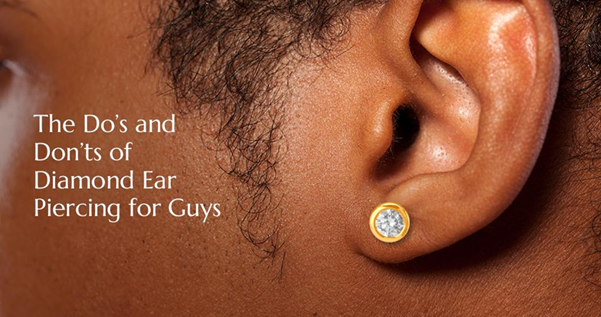
A diamond stud can look good and feel comfortable when you plan it well. This guide explains what to do, what to avoid, how to choose your first stud, and how to care for the piercing. It also covers smart picks in diamond earrings for men, from size and shape to setting and backing, plus simple style ideas and common mistakes.
While diamond ear piercings are a popular style choice for men, it’s important to follow proper hygiene, placement, and aftercare to avoid infections or complications. Although this topic focuses on men, an ear piercing guide for new born highlights similar essentials—safety, professional expertise, and post-piercing care are always key, regardless of age.
Do’s and Don’ts
Here are some essentials, do’s and don’ts you should know before you plan your piercing:
Do
- Use a trained piercer who works with a sterile needle.
- Begin with the lobe if it’s your first piercing.
- Pick a small starter stud in a skin-friendly metal with a flat back.
- Clean with sterile saline once or twice a day.
- Keep your hands off the area and sleep on the other side.
- Ask your piercer before changing jewellery.
Don’t
- Don’t pierce at home or use a gun.
- Don’t twist, rotate, or “test” the stud.
- Don’t use alcohol, peroxide, or heavy creams on fresh skin.
- Don’t size up too fast or swap jewellery early.
- Don’t press the ear under tight headphones or helmets while healing.
How to Choose Your First Diamond Stud
The right stud is the one that sits straight, feels secure, and matches your routine.
Size
For everyday wear, start around 0.10–0.25 ct per ear. This size stays upright, avoids droop, and works for work, gym, and weekends. You can go larger later.
Shape
- Round suits most faces and gives even light.
- Princess (square) gives a clean, structured look.
Both are good choices for a first diamond ear piercing.
Setting
- Bezel: a smooth rim around the stone; lower snag risk; steady for daily use.
- Prong: more light on the stone; make sure the tips are finished smooth.
Metal and backing
Choose a skin-friendly post. A flat back or low-profile back sits close to the ear and feels better on pillows, under caps, and with masks.
Placement and Healing
If this is your first piercing, choose the lobe. It is easy to clean and usually heals faster. Cartilage takes longer to heal. Pressure from over-ear headphones or helmets can irritate it. Tell your piercer if you use these so they can place the piercing away from pressure points.
Healing time is different for everyone. Lobes may feel better in a few weeks, but full healing takes longer. Cartilage often needs several months. Change to diamond studs only when the ear is calm and your piercer approves.
Simple Care Tips
Here are the key simple care tips you can follow:
- Wash your hands before touching the pierced area.
- Use sterile saline 1–2 times a day.
- Pat dry with a clean tissue or paper towel.
- Avoid pools and hot tubs early on.
- Do not change jewellery until your piercer says it is safe.
- If you feel severe pain or pus-like fluid, get professional advice.
Diamond Earrings Designs
Here are various tips to choose an ideal diamond earrings design for you:
- Cut over size: a well-cut, smaller stone often looks brighter than a larger, dull one.
- Centred seat: the stud should sit straight, not tilt or droop.
- Smooth edges: finished metal stops fabric from catching.
- One ear or both: one stud feels focused; two feel balanced. Choose what fits your wardrobe.
- Colour choice: white diamonds are classic; black diamonds give a low-key look.
These simple checks help diamond studs on men look neat and confident without being loud.
Style examples
- Office: small round stud in bezel or tidy prongs.
- Casual days: bezel stud; smooth rim and low snag risk.
- Evenings: a touch larger or a balanced pair for extra shine, still controlled.
Common Mistakes and Quick Fixes
If this is your first time getting a piercing, then it is normal for mistakes to happen. Here are some suggested quick fixes:
- Starting too big → heavy stones tilt and snag. Start small; upgrade later.
- Low-grade posts or backs → can irritate skin. Choose better metal and a flat back.
- Over-cleaning → too many products slow healing. Use saline only.
- Sleeping on the new ear → causes pressure bumps. Sleep on the other side or use a travel pillow.
- Early swaps → may irritate. Wait for calm tissue and a clear OK.
Conclusion
Choose a trained piercer; start with the lobe and a small, skin-friendly stud with a flat back. Keep care simple: sterile saline, clean hands, no twisting, and avoid pressure. Switch to diamond studs only when the ear is calm and your piercer says it’s safe. When buying, choose strong cut quality, a secure bezel or tidy prongs, and a size that sits straight. Follow these steps and your piercing will stay comfortable and look neat every day.